
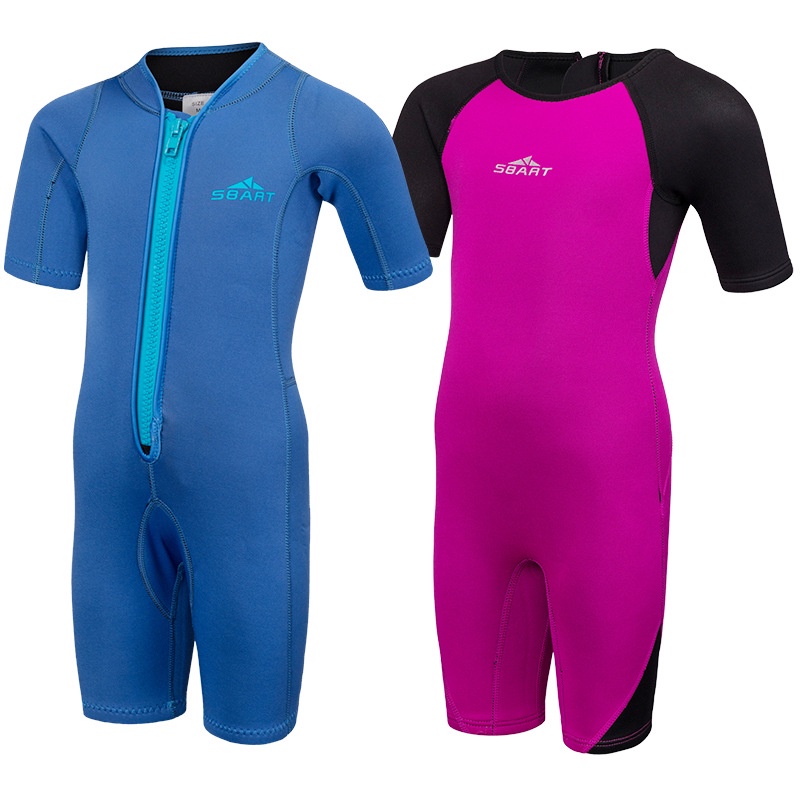
When a customer walks into a dive shop or browses an online watersports retailer, the first question that determines everything else is simple: how cold is the water? Get the thickness right, and the rest follows. Get it wrong, and no amount of premium construction will make up for it. SBART's manufacturing team works with this logic every day — and in this guide, we're sharing how buyers and brands can apply the same thinking.
Water Temperature Guide: Matching Thickness to Conditions
The single most consequential decision in wetsuit selection — for retailers advising customers or brands choosing inventory — is matching thickness to actual water temperature. SBART's production specifications are built around this logic, and we document the relationship clearly for every product we make.
For U.S., UK, Australia, Canada markets specifically, the typical seasonal range means most retailers need inventory across at least two thickness categories. The Standalone: 24°C+ | With spray guard: 18–24°C range covers the majority of active watersports use cases.
Thickness reference by water temperature:
1–2mm primary; lined for warmth, unlined for surf style
SBART recommends retailers stock at least two thickness tiers if their customer base spans multiple seasons or dive sites. A customer who buys a 3/2mm suit in April and then heads to a cold-water site in July will blame the suit — not the water temperature — if the advice wasn't given at point of sale.
Key Construction Features That Actually Matter
SBART's technical team evaluates every wetsuit specification against three performance criteria: thermal retention, flexibility, and durability. The decisions that most affect these outcomes aren't always the visible ones.
Neoprene grade and lining: Used for kayaking, paddleboarding, surfing, and warm-water diving. Antimicrobial linings reduce odor in multi-use scenarios.
Seam construction: Flatlock for comfort; glued for water resistance; some use compressive fit as sole seal
Entry system: Pull-on compressive style; board short style with no seal
For buyers sourcing for U.S., UK, Australia, Canada markets: these details are the difference between a suit that earns repeat purchases and one that earns returns. SBART documents every specification — our spec sheets don't use vague descriptors; they use measurable standards.
Use Cases: What Each Configuration Is Best For
The Dive Skins Mens and Vintage Surf Wear categories serve different customer profiles. Understanding which customer type shops your store — or which segment your brand targets — should drive the products you stock.
The Standalone: 24°C+ | With spray guard: 18–24°C operating range is the primary consideration. Beyond temperature, look at session length: a 30-minute snorkel session and a 3-hour dive in the same water temperature require different warmth margins.
SBART's buyer guides — available for all major product categories in our range — walk through the decision logic for each type. Ask our team for the specific guide relevant to the Best Surf Shorts or Full Body Wetsuit products you're sourcing.
What to Look for When Sourcing Wetsuits
For retailers and brands in U.S., UK, Australia, Canada sourcing new wetsuit inventory or launching custom product lines, SBART's team has distilled the sourcing decision down to five non-negotiable checkpoints:
1. Sample verification: Never bulk-order a wetsuit you haven't touched and tested. Pre-production samples exist for exactly this reason.
2. Specification clarity: Request written specs — thickness per panel, seam type, lining material, zipper brand. Vague product descriptions are a warning sign.
3. Defect rate commitment: Ask for historical data. SBART's defect rate across 2025 was under 0.8% for all product categories.
4. Lead time reliability: Check whether the supplier has a track record in your market. Late delivery is one of the most costly sourcing failures for seasonal retailers.
5. Communication quality: The responsiveness and accuracy of a supplier's pre-sale communication is the best predictor of their post-sale problem resolution. SBART assigns a dedicated account contact to every custom order.
SBART's Custom Wetsuit Manufacturing Capabilities
SBART operates dedicated production lines for the full range of watersports wetsuit and accessories, including Dive Skins Mens configurations, Vintage Surf Wear product types, and specialty constructions for technical diving and professional watersports applications.
Our OEM/ODM service covers the complete process: specification development, material sourcing, sample production, bulk manufacturing, quality inspection, and packaging. Every step is documented and traceable — we provide QC reports with every shipment, not just on request.
For brands and retailers serving U.S., UK, Australia, Canada markets: we have established logistics channels and experience with U.S., UK, Australia, Canada import requirements. Our account team can walk you through the documentation and compliance requirements for your specific market.
Contact SBART to discuss your watersports product requirements. Tell us the Best Snorkel Masks or 4 3 Wetsuit Sale specifications you're looking for — or describe your target customer, and our team will recommend the right starting configuration.
Frequently Asked Questions About Wetsuit Sourcing
- Can neoprene shorts be private-labeled? Yes — SBART offers full private-label service including waistband labels, inner tags, hang tags, and custom packaging for neoprene shorts orders above our standard MOQ.
- What are neoprene shorts most commonly used for? Kayaking, paddleboarding, warm-water surf sessions, and as a layer under dry suits for additional insulation. They're also popular in SUP yoga and for any watersports where full-suit thermal protection is excessive.
- What's the defect rate to expect with neoprene shorts? With proper QC, SBART's defect rate on neoprene shorts is under 1%. Primary defect types to watch for: seam delamination in glued constructions and zipper failure on sealed styles. Our QC checklist addresses both.
- Should I stock lined or unlined neoprene shorts? Lined shorts provide warmth and a smoother exterior (easier to layer); unlined shorts look and feel more like casual board shorts. Lined versions tend to perform better in cooler water; unlined win on comfort and style.