
1. OEM vs ODM: Understanding the Core Difference
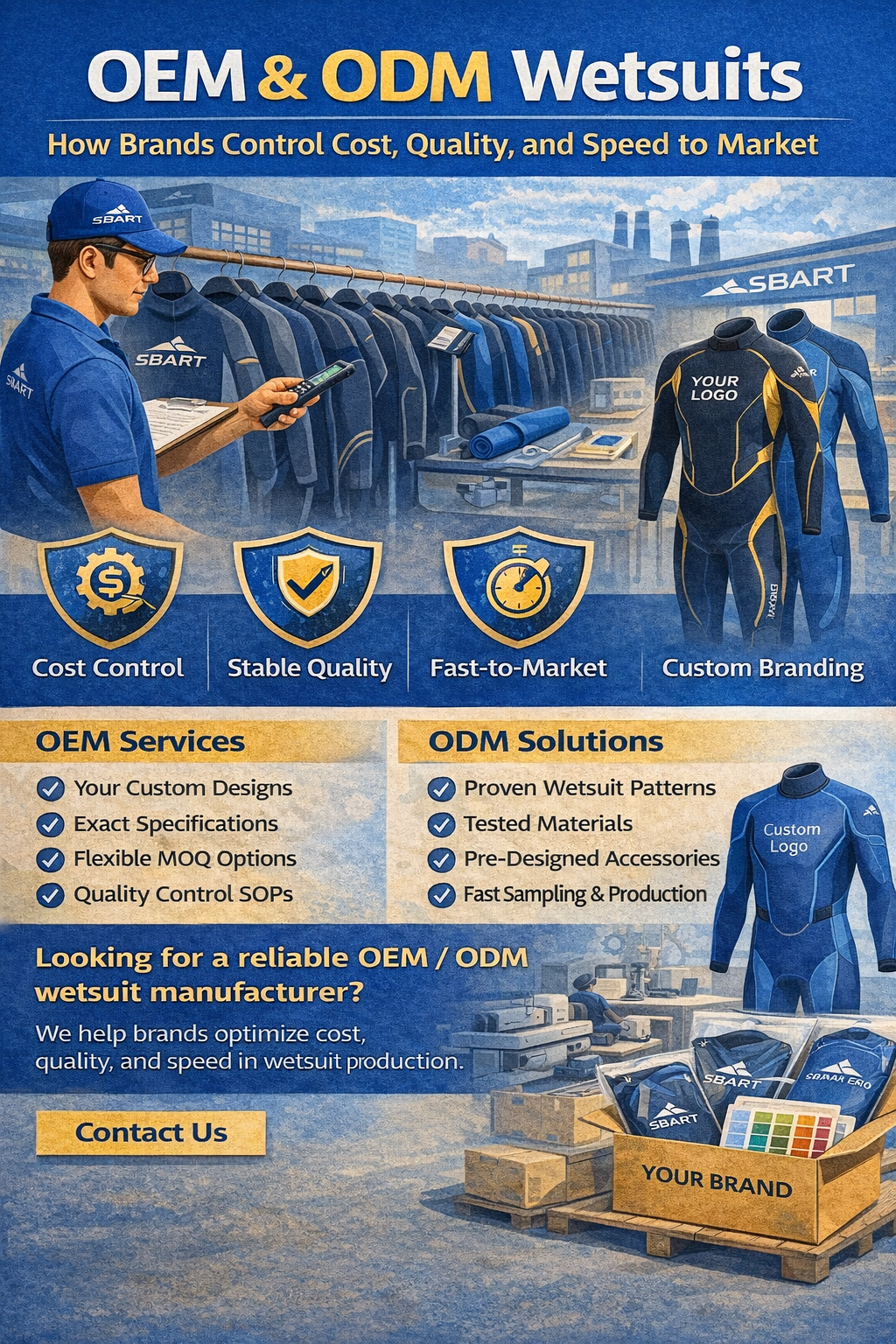
In wetsuit manufacturing, OEM and ODM represent two distinct cooperation models:
-
OEM (Original Equipment Manufacturer)
The brand provides designs, specifications, and technical standards. The factory focuses on production, quality control, and delivery. -
ODM (Original Design Manufacturer)
The factory provides ready-to-use or semi-custom designs, materials solutions, and technical patterns, allowing brands to launch products faster.
For growing brands or distributors entering new markets, ODM significantly reduces development risk and time-to-market.
2. Cost Control Starts at the Factory Level
Wetsuit cost is influenced by multiple factors:
-
Neoprene type (CR, SCR, SBR, limestone-based, etc.)
-
Thickness combinations and panel layout
-
Sewing construction (flatlock, blind stitch, glued & blind stitched)
-
Custom prints, logos, and accessories
An experienced OEM/ODM wetsuit factory helps brands optimize structure and materials—achieving target price points without sacrificing performance or durability.
3. Quality Consistency Is Not Optional
For B2B buyers, quality issues quickly translate into returns, complaints, and brand damage.
Professional wetsuit manufacturers implement:
-
Standardized size charts and grading systems
-
Material batch tracking
-
In-line inspection during lamination and stitching
-
Final inspection before packing
Stable quality is not achieved through low prices—it is built through repeatable processes and technical expertise.
4. Speed to Market Matters More Than Ever
Seasonal demand and fast-changing consumer preferences mean late delivery equals lost sales.
ODM wetsuit solutions allow brands to:
-
Select proven patterns instead of developing from scratch
-
Shorten sampling cycles
-
Launch collections in weeks rather than months
This model is especially suitable for e-commerce brands, distributors, and private label programs.
5. Customization That Supports Brand Identity
OEM/ODM does not mean generic products.
Professional wetsuit factories offer:
-
Private label branding
-
Custom colorways and panel layouts
-
Logo printing and embossing
-
Packaging customization
This ensures the final product aligns with the brand’s positioning—whether performance-driven, entry-level, or lifestyle-focused.
6. Choosing the Right OEM / ODM Partner
When selecting a wetsuit supplier, brands should evaluate:
-
Experience in water sports categories
-
Technical understanding of wetsuit construction
-
Communication efficiency
-
Sampling and production lead times
-
Long-term capacity and scalability
A reliable partner is not just a manufacturer—it is an extension of the brand’s supply chain.
Conclusion
OEM and ODM wetsuit manufacturing provides brands with flexibility, cost efficiency, and speed in an increasingly competitive global market. By working with an experienced wetsuit factory, brands can focus on sales, marketing, and growth—while production remains stable, scalable, and controllable.
Looking for a reliable OEM / ODM wetsuit manufacturer?
SBART supports global brands with custom wetsuit solutions—from development to mass production.