
Introduction:
Surfers spend countless hours under the sun, exposed to saltwater, UV rays, and friction from their boards. Wearing a rashguard is more than just a precaution; it’s essential for sun protection, skin comfort, and overall performance. This blog explores the key reasons why rashguards are a must-have in every surfer's gear collection, with an emphasis on UPF protection, reducing skin irritation, and choosing the right material and fit for optimal surfing experiences.
1. Superior Sun Protection: Understanding UPF Ratings
When you're surfing, you’re exposed to direct sunlight for extended periods, and the water's surface magnifies the UV radiation. Unlike sunscreen, which requires frequent reapplication, a high-quality rashguard with a UPF (Ultraviolet Protection Factor) rating provides consistent protection from the sun's harmful rays throughout the day.
-
What is UPF?
A UPF 50+ rashguard, for instance, blocks up to 98% of UV rays, offering reliable and long-lasting protection. This is especially important for preventing sunburn and minimizing the risk of skin cancer, which is particularly prevalent among surfers who spend a lot of time outdoors.Wearing a rashguard allows you to focus on catching waves without worrying about reapplying sunscreen to hard-to-reach areas.
-
Full Coverage for Key Exposure Zones
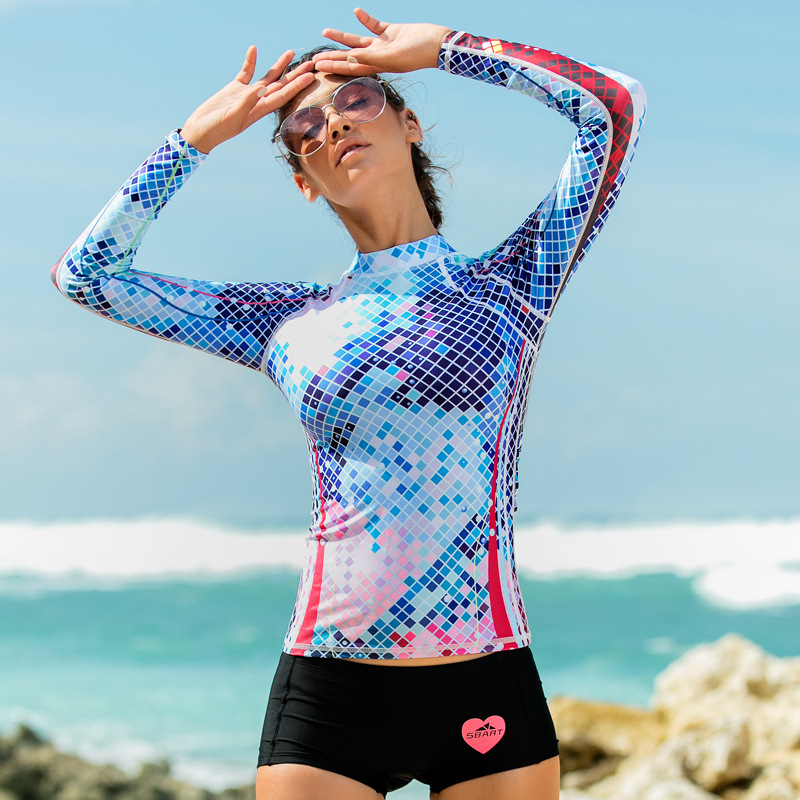
Rashguards cover critical areas such as your back, shoulders, and arms—spots that are directly exposed to the sun when paddling out. Opting for a long-sleeve rashguard can provide additional protection for the arms, making it ideal for surfers who spend hours in the water. women's sublimation printing rashguards
2. Preventing Rashes and Chafing: Why It's Called a "Rashguard"
As its name suggests, a rashguard is designed to prevent skin irritation caused by friction. When paddling on a surfboard, the repeated contact between your chest, arms, and the board’s surface can lead to painful chafing and rashes, especially when saltwater adds to the friction.
-
The Benefits of a Snug Fit
A tight-fitting rashguard offers a smooth layer of protection that minimizes rubbing, especially around sensitive areas like the chest and armpits. This protective layer becomes crucial during long surf sessions, preventing skin damage that could worsen after hours in the water. -
Prolonging Comfort in Saltwater
Saltwater is notorious for drying out the skin and increasing the likelihood of irritation. Wearing a rashguard adds an extra layer of comfort by reducing direct skin-to-board contact, ensuring that surfers can paddle comfortably for extended periods.
3. Flexibility and Performance: Rashguards Designed for Surfers
Surfing demands constant movement—paddling, standing up on the board, and navigating waves. Rashguards are specifically designed to allow full mobility without hindering performance.
-
Stretchable, Quick-Drying Fabrics
Most rashguards are made from a combination of spandex, nylon, and polyester, which provide both stretch and durability. These materials ensure the garment fits snugly to the body without restricting movement. The quick-drying properties of these fabrics also make rashguards a practical choice for surfers, as they won’t become heavy with water. -
Breathability and Comfort
For surfers who prefer loose-fitting rashguards, these options provide the same level of UV protection while offering greater breathability. Loose fits are ideal for those who prioritize comfort over a streamlined fit, particularly in warmer climates where heat is a concern.
4. Thermal Protection in Cold Waters
Rashguards aren’t only for warm, sunny days. In colder waters, they offer an extra layer of insulation. Although not as thick as wetsuits, long-sleeve rashguards can help retain body heat, especially during dawn or dusk surf sessions when the temperatures drop.
- Layering Under a Wetsuit
For surfers who wear wetsuits, rashguards serve as an excellent inner layer, reducing the friction between the wetsuit and the skin while providing additional warmth. This layering technique is particularly useful in cold-water surfing spots, enhancing overall comfort.
5. Sustainable and Eco-Friendly Rashguards
Many surfers are environmentally conscious, and surf brands have responded by offering eco-friendly rashguards made from recycled or sustainable materials. Recycled polyester, for instance, is a common material used in eco-friendly rashguards, which helps reduce plastic waste while maintaining the performance surfers need.
By choosing eco-friendly options, surfers can enjoy their time in the water while supporting sustainability efforts. This choice aligns with the growing awareness around environmental issues in the surfing community.
Conclusion
A rashguard is an essential piece of gear for surfers, providing sun protection, preventing skin irritation, and enhancing performance in the water. Whether you’re surfing in tropical sun or cold waters, a rashguard ensures comfort, safety, and flexibility. From UPF 50+ protection to chafe prevention and eco-friendly options, there’s a perfect rashguard for every surfer's needs.
Investing in a high-quality rashguard means you can enjoy longer, safer surf sessions, while also taking care of your skin and the environment. Make sure to choose the right fit, fabric, and style for your surfing adventures!