
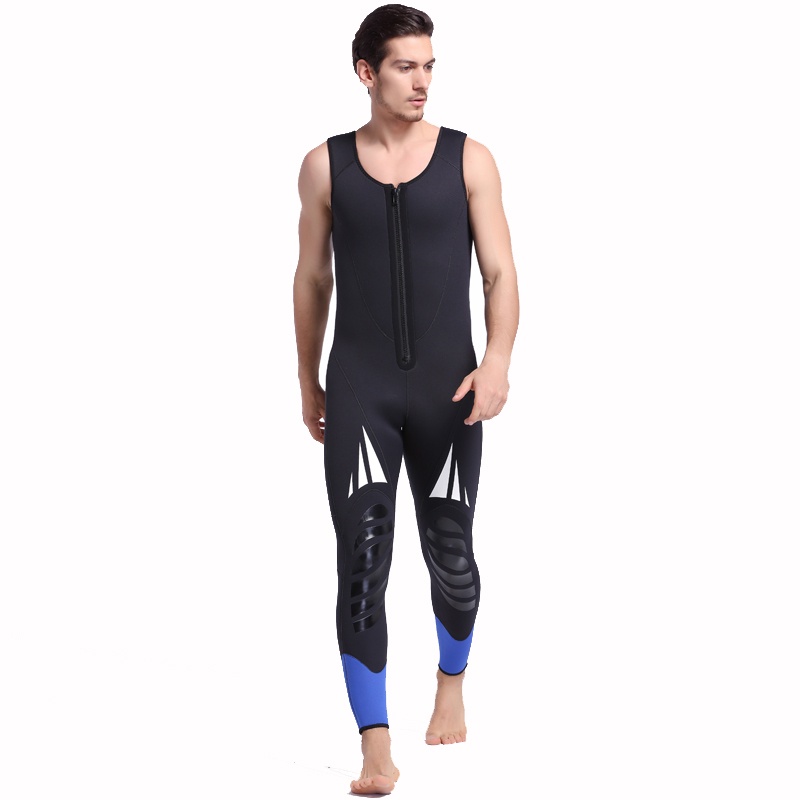
Most wetsuit buying mistakes fall into one of three categories: wrong thickness for the water temperature, poor seam construction that flushes cold water in, and a fit that's wrong in ways that aren't obvious until the first real use. These are fixable problems — but they're easier to prevent at the sourcing stage than to address after you've stocked inventory your customers won't buy.
The Three Most Common Wetsuit Buying Mistakes
After years of working with retailers and brands across U.S., UK, Australia, Canada, SBART's team has catalogued the mistakes that most consistently lead to customer returns, negative reviews, and lost repeat business:
Mistake 1: Buying for the wrong water temperature. This is responsible for the majority of wetsuit returns. Always confirm the actual water temperature range your customer will use the suit in. The Scuba Diving Shop and Scuba Supplies categories are both broad — a scuba diving shop suit meant for tropical waters will fail in temperate conditions, and vice versa.
Mistake 2: Ignoring seam construction. Seams are where wetsuits fail. GBS seams offer a good balance for most uses; liquid-taped seams are worth the premium for cooler water applications. Flatlock seams standard (comfortable, allows some water exchange); GBS for cooler water spring suits.
Mistake 3: Poor fit advice. A wetsuit that's too tight restricts circulation and defeats the purpose of the thermal layer. One that's too loose flushes cold water through with every movement. SBART provides fit guides and size tolerance documentation with every product — use them.
How to Identify Quality Construction at Any Price Point
Quality wetsuits share a set of identifiable characteristics regardless of price tier. Here's what to look for when evaluating stock or reviewing a supplier's product samples:
- Neoprene stretch: Quality neoprene stretches in all directions. Pull diagonally on a panel — it should recover without permanent deformation.
- Seam consistency: Check that all seams are flush, consistent, and free of visible gaps or rough edges. Run a finger along the seam interior — it should be smooth, not catching.
- Zipper quality: YKK or equivalent marine-grade zippers are standard in quality wetsuits. Test the zipper action: it should move smoothly with no binding.
- Panel alignment: Panels should meet precisely at seams. Visible misalignment or overlap is a quality control failure.
SBART provides pre-shipment QC reports and defect rate documentation for every order — ask for this when negotiating with any supplier, not just us.
Choosing a Manufacturing Partner: What the Best Suppliers Do Differently
The difference between a reliable wetsuit manufacturing partner and a problematic one compounds over every season. The early signals are usually visible before the first order is placed:
Sample-to-production consistency: The pre-production sample should match bulk output within normal material tolerance. Ask for a side-by-side comparison of a previous sample against bulk photos from the same production run.
Problem ownership: When something goes wrong — and it will occasionally, even with the best suppliers — how does the manufacturer respond? Do they acknowledge the issue and present a resolution, or do they redirect blame to logistics, materials, or the customer?
Technical competence: Can they explain why they recommend a specific thickness or seam type for your target market? Technical depth in pre-sale conversations is a strong positive signal.
SBART's OEM/ODM team includes former product developers and quality engineers — we don't just manufacture; we contribute to the product definition process. That's the kind of partner worth having.
SBART's Custom Wetsuit Manufacturing Capabilities
SBART operates dedicated production lines for the full range of watersports wetsuit and accessories, including Scuba Diving Shop configurations, Scuba Supplies product types, and specialty constructions for technical diving and professional watersports applications.
Our OEM/ODM service covers the complete process: specification development, material sourcing, sample production, bulk manufacturing, quality inspection, and packaging. Every step is documented and traceable — we provide QC reports with every shipment, not just on request.
For brands and retailers serving U.S., UK, Australia, Canada markets: we have established logistics channels and experience with U.S., UK, Australia, Canada import requirements. Our account team can walk you through the documentation and compliance requirements for your specific market.
Contact SBART to discuss your watersports product requirements. Tell us the 3Mm Shorty Wetsuit or Buy Scuba Gear specifications you're looking for — or describe your target customer, and our team will recommend the right starting configuration.
Wetsuit Sourcing Q&A for Retailers and Brands
- What's a reasonable price point to stock spring suits at? Entry-level spring suits typically retail at USD 60–100; mid-range at USD 100–180; premium styles with premium construction can command USD 180–280. SBART's wholesale pricing supports all three tiers.
- When should my customers choose a spring suit over a full wetsuit? When water temperature is above 18°C or when the activity involves frequent surface time. Spring suits are also preferred for warm-blooded surfers who overheat in full suits even in cool water.
- Are spring suits suitable for certified diving? Not typically. Spring suits lack the thermal protection and seal design required for even moderate-depth diving. They're best reserved for surface watersports, snorkelling, and swimming.
- Can spring suits be customized with brand labels? Yes — SBART offers brand labeling, custom hang tags, and packaging design as part of our OEM service for orders above our standard MOQ.