
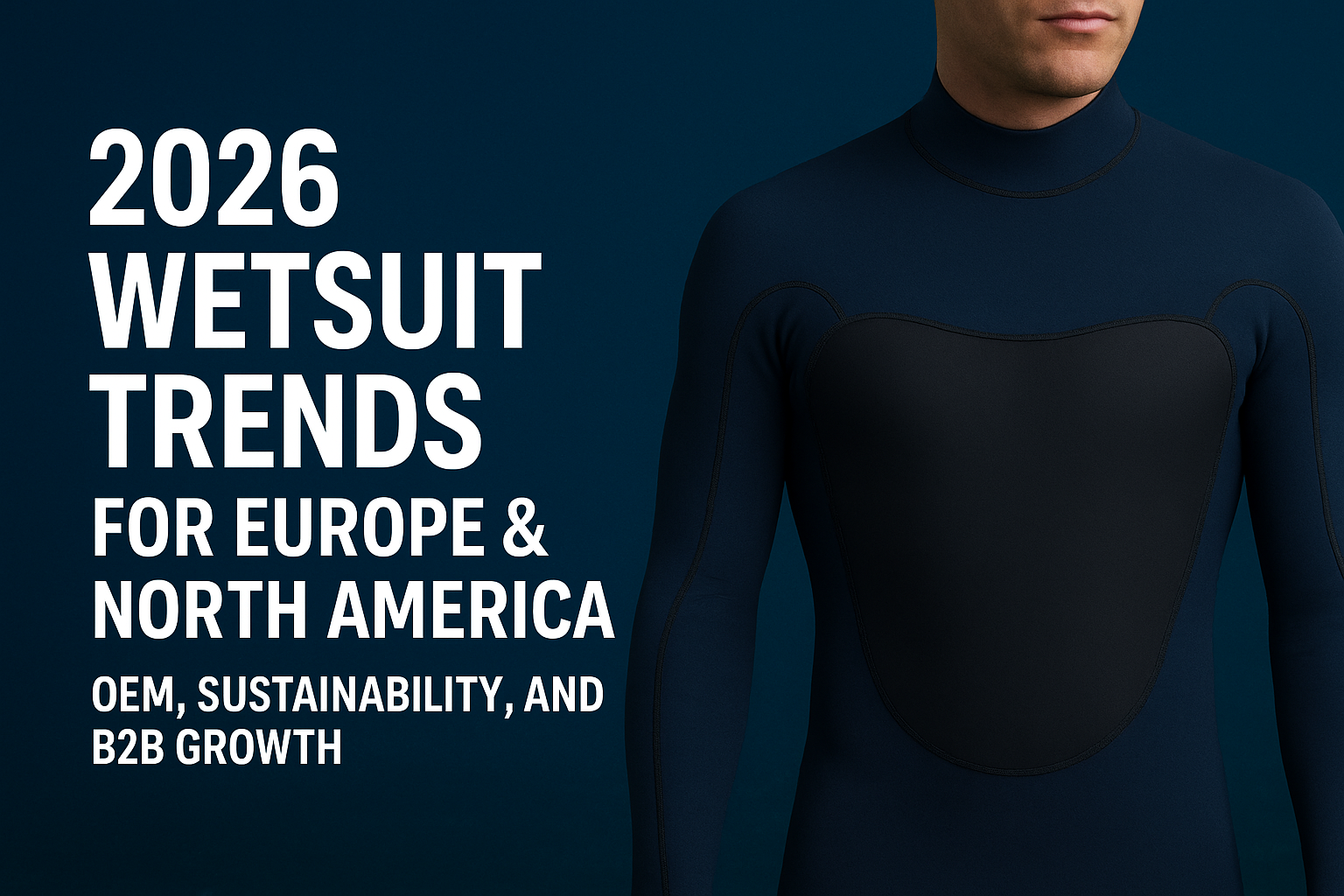
2026 Wetsuit Market Outlook in Europe and North America
For B2B buyers in Europe and North America, the wetsuit industry in 2026 is set to enter a new growth stage. Driven by sustainability, consumer demand for advanced seam technologies, and the rise of small-batch OEM orders, distributors and brand owners must adjust their sourcing strategies.
1. Sustainability: A Non-Negotiable Requirement
European Union regulations and U.S. retail standards are pushing suppliers toward eco-friendly materials. By 2026:
-
Recycled neoprene and limestone-based alternatives are expected to cover more than 40% of the wetsuit market in Europe.
-
OEKO-TEX and GRS certifications will become entry requirements for large retailers and distributors.
-
Brands that align with sustainability will see 15–20% higher retail acceptance.
For importers and wholesalers, sourcing eco-certified wetsuits will be critical to maintaining long-term partnerships with retailers.
2. Technology and Comfort: Consumer-Driven Innovation
North American and European customers prioritize performance and comfort. B2B buyers are demanding:
-
Seamless bonding and blind-stitch upgrades to reduce water leakage.
-
Lightweight waterproof zippers suitable for drysuits and hybrid wetsuits.
-
Four-needle six-thread reinforcement for durability in extreme sports.
Wholesalers offering higher-spec wetsuits can expect stronger margins, especially in premium diving and surfing markets.
3. Market Segmentation: Targeted Growth Areas
-
Europe: Cold-water swimming and freediving gear will dominate, with strong growth in Scandinavia, Germany, and the UK.
-
North America: Surfing, paddleboarding, and diving training will drive demand, particularly in coastal states like California and Florida.
-
Professional Use: Rescue teams, fishing industries, and sailing clubs are expanding their procurement budgets, opening opportunities for bulk orders.
4. OEM Customization: Small Batches, High Value
By 2026, more than 50% of B2B orders in Europe and North America are expected to shift toward small-batch OEM customization. Buyers want:
-
Low MOQ (50–100 pieces) to test new markets.
-
Custom branding, printing, and packaging.
-
Faster sampling cycles (7–10 days).
For distributors and brand owners, working with flexible OEM suppliers is the key to launching differentiated products quickly.
5. Supply Chain Stability: A Buyer’s Priority
The pandemic and freight disruptions highlighted risks in global supply chains. By 2026, U.S. and European B2B buyers will focus on:
-
Suppliers with proven export experience.
-
In-house production capacity to ensure consistency.
-
Partnerships with logistics providers that can handle fast customs clearance into EU and U.S. ports.
Conclusion
For B2B buyers in Europe and North America, the wetsuit market in 2026 offers opportunities in eco-certified products, advanced seam technology, and small-batch OEM customization.
Partnering with manufacturers that combine sustainable materials, certified production, flexible MOQ, and reliable logistics will be essential for distributors and brand owners seeking growth.
The winners in the 2026 wetsuit industry will not be those offering the lowest price, but those offering the best alignment with market trends, certifications, and customer expectations.