
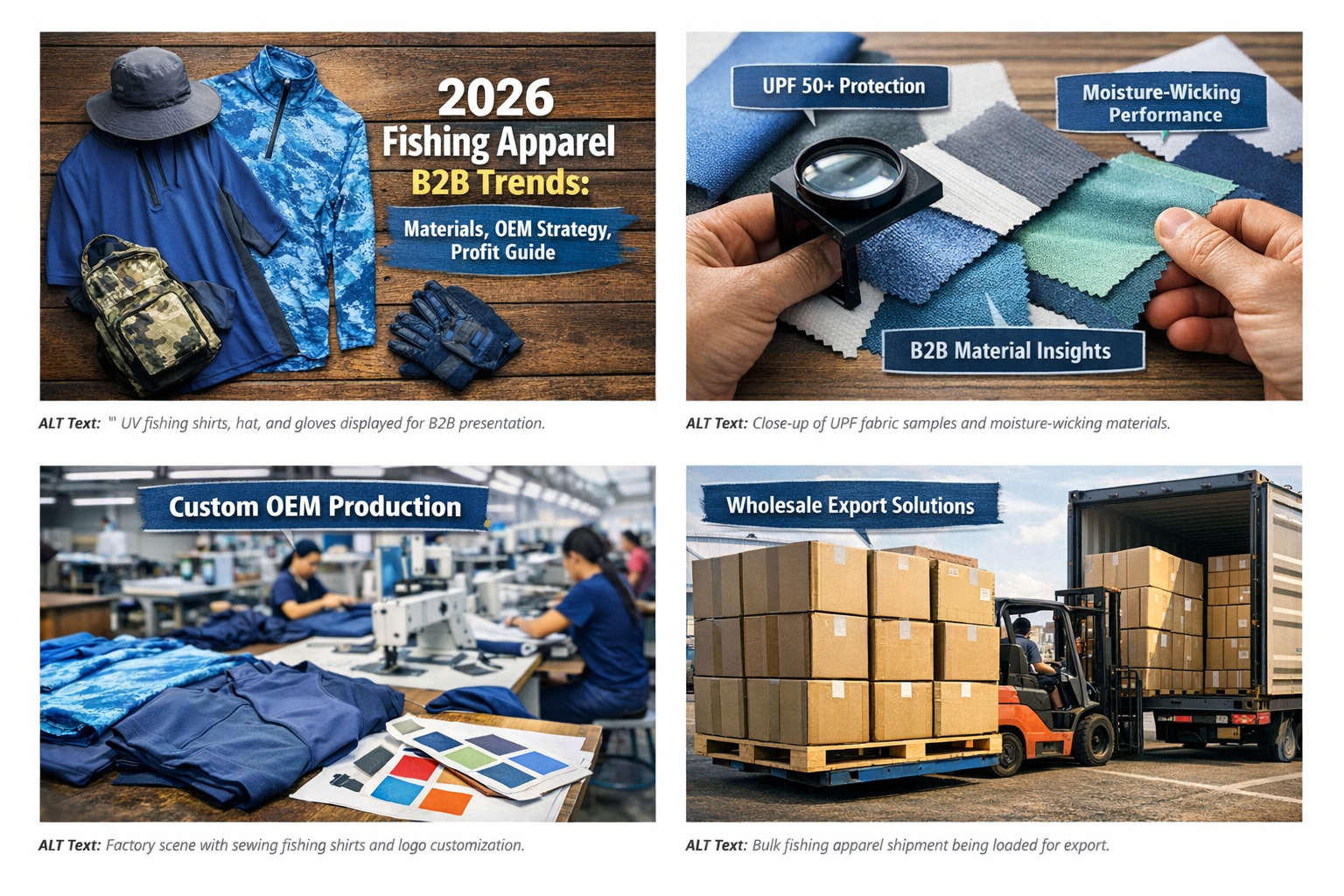
As recreational fishing, sport fishing, and coastal tourism continue to grow globally, fishing apparel has evolved from basic workwear into a high-margin functional category. For B2B buyers, selecting the right fishing apparel manufacturer is no longer just about price—it is about materials, functionality, compliance, and long-term supply stability.
This guide outlines the key fishing apparel trends for 2026, helping wholesalers, brands, and distributors make informed OEM and bulk purchasing decisions.
1. Market Demand: Why Fishing Apparel Is a Strong B2B Category
Fishing apparel demand is driven by three core buyer segments:
-
Retail & E-commerce Brands – Seeking differentiated designs and private label solutions
-
Distributors & Wholesalers – Focusing on repeatable SKUs and stable margins
-
Professional & Club Buyers – Requiring durability, compliance, and bulk supply
Compared to fashion apparel, fishing clothing offers:
-
Longer product life cycles
-
Lower seasonality risk
-
Strong add-on sales potential (hats, buffs, gloves)
2. Key Materials Defining Fishing Apparel in 2026
Material selection directly impacts performance, pricing, and customer satisfaction.
Core Fabrics
-
Polyester & Nylon Blends – Lightweight, quick-dry, cost-efficient
-
UPF-Rated Fabrics (UPF 30–50+) – Essential for long-exposure fishing environments
-
Moisture-Wicking Yarns – Improve comfort in tropical and offshore use
Performance Treatments
-
Anti-odor finishes
-
Saltwater-resistant coatings
-
Stretch enhancement for casting movement
B2B buyers should confirm fabric test reports, UPF certification, and colorfastness standards during sourcing.
3. Functional Design Features Buyers Expect
High-conversion fishing apparel typically includes:
-
Ventilated mesh panels
-
Adjustable cuffs and hoods
-
Thumb holes and face masks for sun protection
-
Reinforced seams for frequent washing
For OEM projects, modular designs allow multiple SKUs from a single base pattern, improving inventory efficiency.
4. OEM & Private Label Strategy for Fishing Apparel
Successful private label fishing apparel programs focus on:
-
Logo Application: Sublimation, embroidery, heat transfer
-
Color Customization: Pantone-matched prints for brand consistency
-
Packaging Options: Retail-ready bags, hangtags, size stickers
Typical OEM MOQ ranges:
-
Stock fabric styles: lower MOQ
-
Full custom fabric & print: higher MOQ, better brand exclusivity
5. Wholesale Pricing & Profit Considerations
Fishing apparel offers attractive B2B margins when planned correctly:
-
Stable raw material costs
-
Repeat orders with minimal redesign
-
Upselling opportunities through collections
Professional buyers evaluate:
-
Unit cost vs. landed cost
-
Reorder lead times
-
Factory capacity during peak seasons
Working with an experienced fishing apparel manufacturer helps reduce supply chain risk and improve long-term profitability.
6. Choosing the Right Fishing Apparel Manufacturer
Before placing bulk orders, B2B buyers should assess:
-
OEM/ODM development capability
-
Fabric sourcing transparency
-
Quality control process
-
Export experience and compliance knowledge
A reliable supplier acts not just as a factory, but as a long-term production partner.
Conclusion
Fishing apparel continues to be a high-growth, high-potential B2B category in 2026. Buyers who prioritize material performance, functional design, and OEM scalability will gain a clear competitive advantage.
If you are sourcing custom fishing apparel, fishing shirts, or bulk fishing clothing, working with a specialized manufacturer ensures consistency, compliance, and sustainable margins.
Looking for a reliable fishing apparel OEM supplier?
Contact SBART to discuss custom designs, bulk pricing, and long-term production solutions.