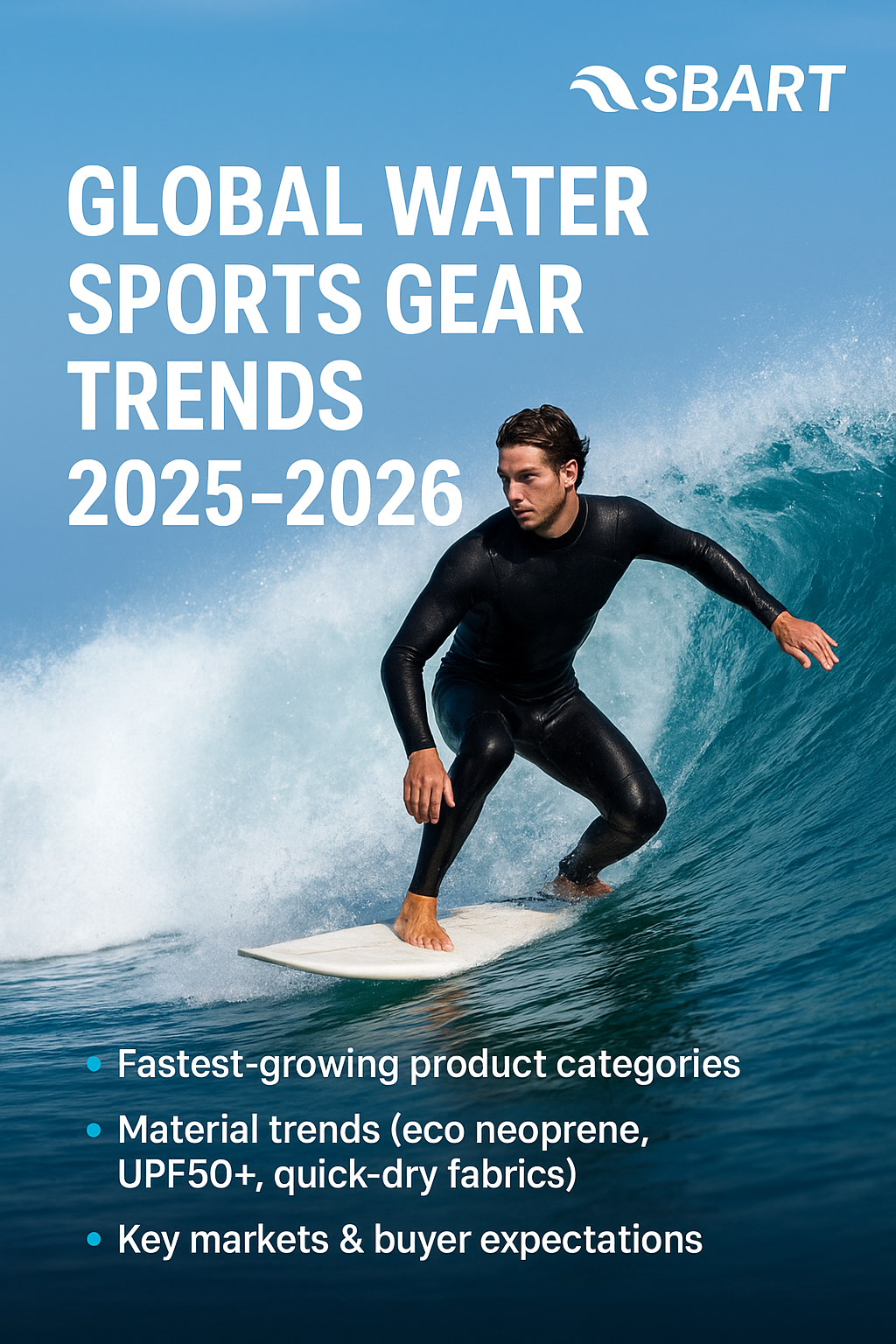
The global water sports industry is entering a new growth cycle driven by tourism recovery, outdoor lifestyle trends, and rising consumer interest in health and adventure activities. From wetsuits to life jackets, rashguards, swimwear, and SUP accessories, demand for high-performance and sustainably made products is increasing across major markets.
For wholesalers, distributors, and private-label brands, 2025–2026 will be years of opportunity — if you choose the right products, the right materials, and the right OEM partner.
This report explores market trends, forecasted demand, and actionable strategies to strengthen your procurement, reduce supply chain risks, and improve profitability.
1. Why Now Is the Best Time to Expand in Water Sports Gear
Several global forces are reshaping the category:
1. Outdoor sports participation has surged
Water sports such as surfing, diving, snorkeling, paddle-boarding, and open-water swimming continue to grow globally, supported by younger demographics and tourism recovery.
2. “Performance + Comfort + Sustainability” is the new consumer standard
Customers no longer accept generic products. They want:
-
premium neoprene
-
eco-friendly materials
-
UV protection
-
stylish designs
-
reliable safety certification
-
long-lasting durability
3. Private-label and OEM demand continues to rise
Retailers and emerging brands want unique styles, lower MOQs, flexible manufacturing, and reliable quality control — creating a golden opportunity for factories with mature OEM/ODM capabilities.
4. Supply chains are shifting
Buyers are reducing reliance on single-country supply routes. They want partners who can offer stable production, fast turnaround, and customization flexibility.
Result:
2025–2026 will favor suppliers that combine high-quality production, sustainable materials, customization, and fast response — exactly the strengths that top Asian manufacturers possess.
2. Market Forecast: Where Is Global Demand Growing Fastest?
Based on industry observations and trade data, these regions show the strongest growth potential:
🌍 Europe
-
Strong demand for triathlon wetsuits, open-water swim gear, and CE-certified life jackets
-
Eco-friendly neoprene and recycled swimwear fabric gaining traction
-
Seasonal bulk orders + steady replenishment cycles
🇺🇸 North America
-
High demand for surfwear, rashguards, and paddle-sports gear
-
Customers prefer bold designs + UV protection + durable stitching
-
Retailers increase private-label production to control margins
🇦🇺 Australia & New Zealand
-
Mature but expanding markets for surf and water-rescue equipment
-
Premium wetsuits and women’s swimwear lead demand
🌊 Southeast Asia
-
Rising water tourism and water-sports rentals
-
High-volume, cost-effective swimwear and life jackets in demand
📈 Global best-selling product categories (2025–2026 forecast)
-
Wetsuits (3mm–5mm, triathlon models, eco neoprene)
-
Life jackets (ISO/CE certified, lightweight, rental-use models)
-
Rashguards & UV shirts (UPF50+, printing-friendly fabrics)
-
Women’s swimsuits (zip-front, one-piece, printed designs)
-
Youth/children’s swimwear & flotation gear
-
SUP and snorkeling accessories
3. Key Consumer Trends Shaping Buyer Decisions
▶ 1. Sustainable Materials
Brands that use:
-
recycled polyester
-
limestone neoprene
-
water-based adhesives
gain stronger favor from eco-conscious markets.
▶ 2. Lightweight, quick-dry fabrics
Especially in rashguards and fishing shirts, buyers prefer:
-
breathable mesh
-
anti-pilling
-
anti-UV fabric
-
cooling technology
▶ 3. Women’s performance swimwear boom
The fastest-growing segments include:
-
long-sleeve one-piece swimsuits
-
zip-up surf suits
-
modest swimwear
-
sculpting athletic swimsuits
▶ 4. Rental-grade durability for water-sport centers
Hotels, resorts, and training centers are ordering high-volume, durable:
-
wetsuits
-
life jackets
-
rashguards
Durability + cost-effectiveness are their primary buying drivers.
▶ 5. Custom branding & small-batch replenishment
Global retailers are shifting toward:
-
unique prints
-
custom zipper colors
-
branded elastic bands
-
personalized packaging
Low MOQ + fast restocking is a major competitive edge in 2025–2026.
4. What B2B Buyers Need from OEM Manufacturers in 2025–2026
1. Diverse Material Options
Buyers increasingly request:
-
CR/SCR/SBR neoprene
-
eco neoprene
-
quick-dry nylon
-
anti-UV spandex
-
breathable mesh
A strong supplier must offer multiple grades to fit different markets and budgets.
2. Transparent quality control
Factories should provide:
-
fabric test reports
-
seam techniques (flatlock, blind stitch, taped seam)
-
needlework density measurements
-
sample approval procedures
3. Clear compliance & certifications
For example:
-
CE / ISO for life jackets
-
environmental certificates for eco neoprene
-
colorfastness and anti-UV reports for rashguards
4. Fast production cycles
Speed is becoming a decisive factor:
shorter sampling times → faster restocking → lower inventory cost → higher sell-through rates.
5. Design support & trend insights
Buyers prefer suppliers who can offer:
-
new color panels
-
latest market prints
-
seasonal collection suggestions
-
tech-pack support
5. Procurement Strategy: How to Choose Factory Products That Will Sell Well
Below is a proven purchasing framework for B2B buyers.
✔ Step 1: Analyze target markets
Different regions prioritize different functions:
-
Europe: CE safety standards + eco neoprene
-
USA: fashion-driven prints + UPF50+
-
Australia: surfing durability + comfort
-
Middle East: modest swimwear + long-sleeve styles
✔ Step 2: Combine “classic models + trend models”
A balanced catalog might include:
-
reliable evergreen models (black 3mm wetsuits)
-
seasonal printed rashguards
-
premium performance models (triathlon wetsuits)
-
women’s high-fashion one-piece suits
✔ Step 3: Use small-batch testing before mass orders
Test 30–100 pcs to confirm:
-
quality
-
retail response
-
feedback from customers
Then place larger orders with more confidence.
✔ Step 4: Focus on margin-building categories
High-profit products include:
-
life jackets
-
women’s swimwear
-
eco neoprene wetsuits
-
long-sleeve rashguards
✔ Step 5: Leverage OEM/ODM services
OEM customization enables:
-
higher brand value
-
better customer loyalty
-
higher retail price
-
faster differentiation
6. 2025–2028 Growth Predictions: What Will Shape the Next Wave
1. Eco-friendly neoprene & recycled fabrics become mainstream
By 2027, most premium brands may fully switch to sustainable neoprene blends.
2. AI-driven demand forecasting for retail brands
Retailers will rely on data to reduce over-stocking and request faster production.
3. Expansion of youth water training programs
This will boost demand for:
-
children’s life jackets
-
kids' wetsuits
-
junior rashguards
-
school swimming uniforms
4. Hybrid outdoor/water gear
A rising category:
-
UV jackets
-
quick-dry hiking + water shirts
-
multi-sport compression suits
5. High-speed customization
Brands will expect:
-
7–12 day sampling
-
15–25 day production
-
small MOQs
-
personalized trims and colors
Factories with agile production lines will dominate this cycle.
7. Conclusion: How Wholesalers & Brands Can Win in 2025–2026
Water sports equipment is transitioning toward a more premium, sustainable, and design-driven era.
To stay competitive, B2B buyers need to:
-
Choose reliable OEM suppliers with proven QC
-
Prioritize sustainable neoprene and high-tech fabrics
-
Invest in women’s and youth categories
-
Adopt small-batch testing + fast replenishment strategies
-
Build brand differentiation through customizations
Suppliers like SBART, with strong material sourcing, professional pattern design, full-range OEM/ODM service, and stable capacity, give brands a competitive advantage in this growing market.
If you’re planning to expand your water sports product line for 2025–2026 —
SBART can help with sample development, OEM customization, private-label branding, and fast production.
👉 Contact us for samples, catalogs, or a custom quotation.
Our team replies within 24 hours with tailored solutions for your market.